Modelroom
Model makers for scale models, prototypes and presentation pieces
Nobody around the table can picture the building from the elevations, and the factory won't quote until it has held a sample.
You are asking people to make up their minds about something that doesn't exist yet, and a model is how they do it. You get architectural models, working prototypes and presentation pieces made to your drawings, finished by hand and delivered for the date. When the prototype is right, finding the factory for the run is the last step we take with you.
- 01 / 06
The date is fixed: the committee, the investor meeting or the factory's slot for tooling. You have drawings and a CAD file, and everyone keeps asking to see the real thing.
- 02 / 06
One firm makes the model, a different bureau prints the prototype, and when it comes to production you are left looking for a factory on your own.
- 03 / 06
A flaw a prototype should have caught turns up after the steel tool is cut, when every change is expensive. Or the model arrives late, reads wrong at scale, and your scheme is judged on a poor version of itself.
- 04 / 06
Modelroom takes you from CAD or a scan to a scale model, a working prototype or a hand-finished presentation piece, and once the prototype is signed off, helps you find the factory for the run.
- 05 / 06
Every model is drawn and rendered before a single part is printed. Printing, machining, cutting and hand finishing then happen at neighbouring benches, so a problem found at the finishing stage goes straight back to the person who drew the part.
- 06 / 06
The model sits on the committee table and does the explaining for you, and the first production part matches the prototype you held in your hand.
What we make
[ 02 · SERVICES ]MODELROOM · 52.472222 −1.894722 · T+00:00:00Architectural model making
Scale models of a scheme for a planning submission, a consultation or a client pitch, delivered for the date.
Prototype making
Working prototypes and pre-production samples, then the factory for the run, checked part by part.
Presentation models
Polished, hand-finished models and scanned replicas for a trade stand, a pitch or the boardroom table.
The object in this room
[ 03 · CONCEPT STUDY ]MODELROOM · 52.472222 −1.894722 · T+00:00:00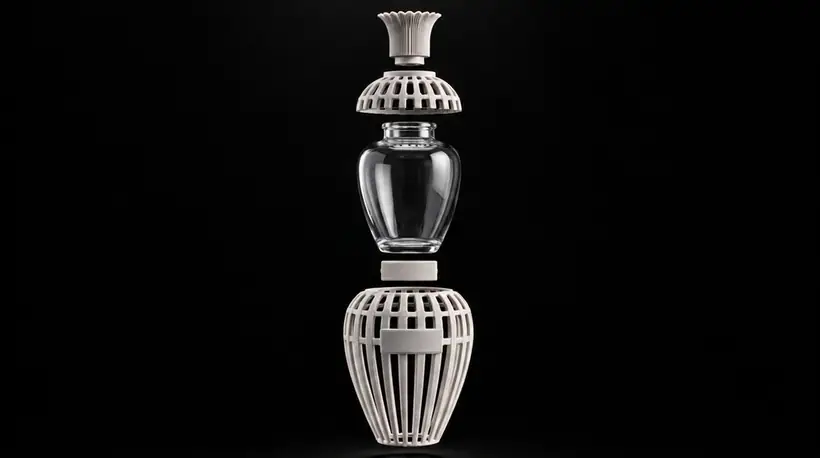
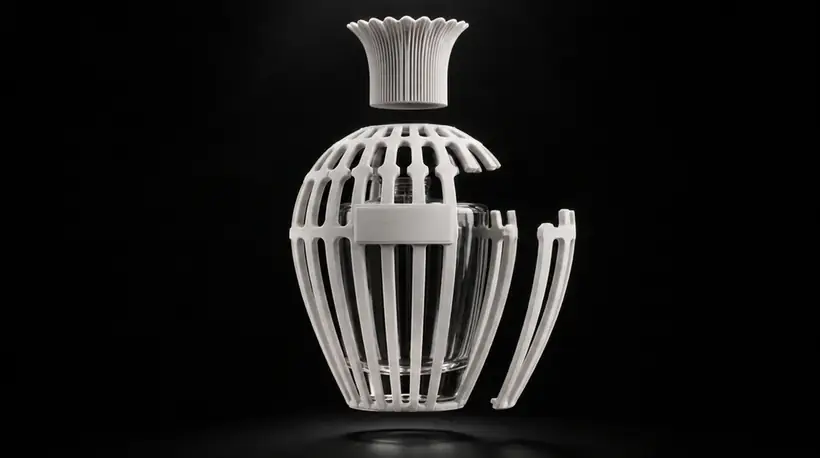
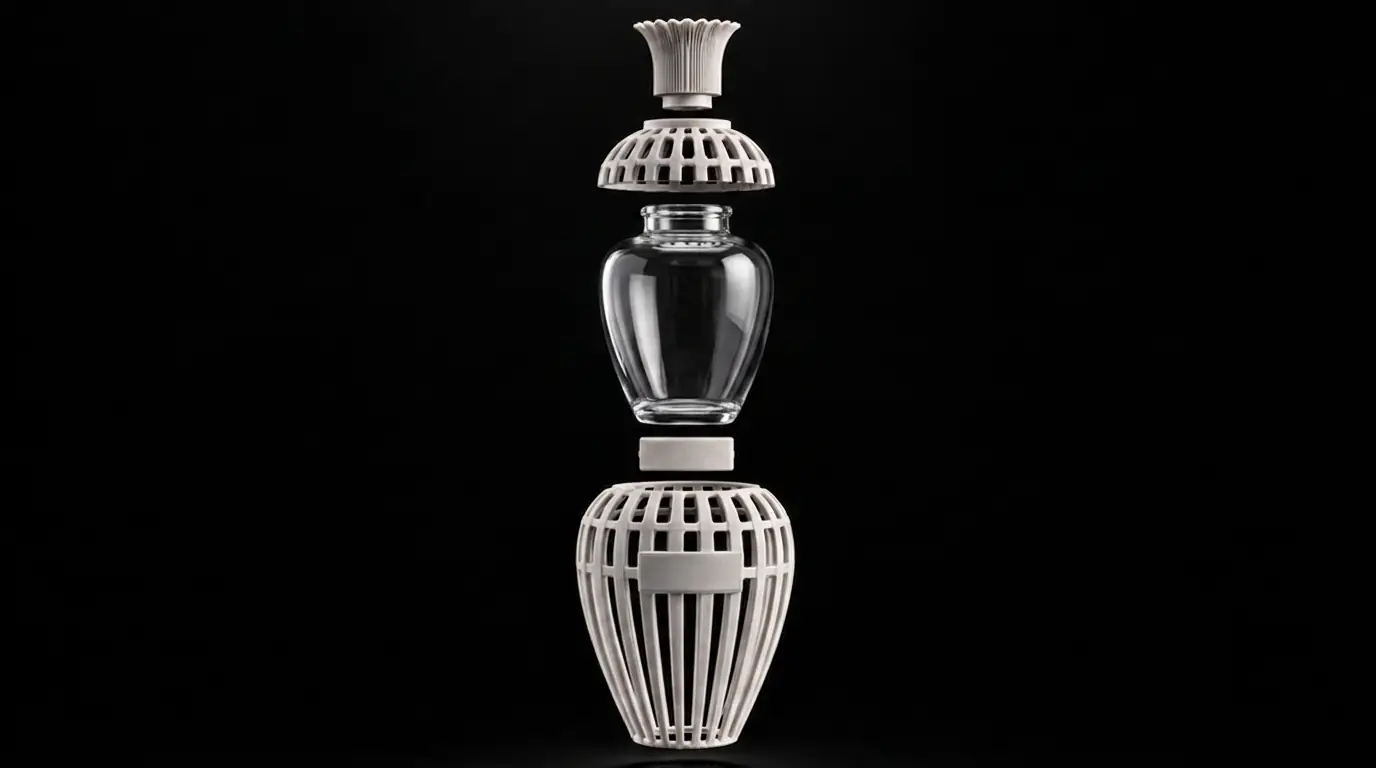
Taken apart into cap, shoulder, glass, collar and cage and printed in white, the flacon is our own made-up object, which each room treats its own way. No client owns it.
How it runs
[ 04 · PROCESS ]MODELROOM · 52.472222 −1.894722 · T+00:00:00- 01
Drawings
Your CAD, your drawings or the object itself, scanned if needed.
- 02
Render
A picture of the finished model or prototype, agreed before any material is cut.
- 03
Make
Printing, machining, cutting and hand finishing at our own benches.
- 04
Test
Prototypes checked for fit and function; models checked at scale and in the light they will be seen in.
- 05
Production
A factory found for the run and its first parts checked against your drawing.
What this room won’t do
- We won't let a design go to production tooling without telling you plainly what the prototype showed, including the parts you would rather not hear.
- We won't agree a delivery date your design timetable can't support.
- No detail your audience will never see.
Asked often
What is the difference between a prototype and a presentation model?
A prototype is built to test something: whether a product fits, works, holds together or can be manufactured. A presentation model is built to be looked at, so finish, colour and scale matter and it may have no working parts. Many product projects need both, a works-like prototype for the engineers and a looks-like model for buyers.
How long does it take to build a scale model?
A simple massing model can take days. A detailed presentation model for a planning meeting usually takes a few weeks, and a large development model longer. The deadline and how settled the design is matter most. Modelroom works back from your date, building the parts of the scheme that are still changing last or as removable sections.
How much does an architectural model cost?
Architectural model cost depends mostly on the level of detail, more than on physical size. Scale, materials, the extent of the site, lighting and how tight the deadline is all matter too, and a simple massing study costs a fraction of a detailed development model. Modelroom prices against your drawings, with a render of the model agreed before any material is cut.
Can you 3D print a working prototype?
Yes, for many products. SLS printing gives tough parts with no weak direction, suitable for functional testing and complex shapes, while SLA gives a smoother surface for visual prototypes but is more brittle. When a part needs the real material's properties, CNC machining or prototype tooling is the better route. The choice follows what the prototype has to prove.
What materials are architectural models usually made from?
Architectural models are usually built from MDF, foamboard, acrylic, plywood and hardwoods, with 3D printed parts for fine detail. MDF and foamboard are economical and suit massing and context models; acrylic and timber give a sharper, paintable finish for presentation models. Laser cutting achieves accuracy of around a tenth of a millimetre at 1:50 and above.
Do model makers also do 3D scanning?
Some do. Modelroom scans existing objects and turns the scan into a CAD model that can be scaled, edited, printed or machined. It is the quickest route to an accurate replica, or to redesigning a part that has no original drawings. The accuracy required depends on the use, from a tenth of a millimetre for display to far tighter for engineering fits.
Hal is automated. Describe the object, the scale you think you need and the day the model has to be in the meeting room.
Send us the CAD file.
Or the elevations, or photos of the object you want scanned. Tell us who will be looking at the model, and where.
info@stillroomcreative.com